Author: admin

  • Khớp cắn hở có niềng được không? Chỉ định, nguyên nhân, tái phát

    Khớp cắn hở có niềng được không? Có, nhiều trường hợp có thể điều trị bằng mắc cài hoặc khay trong suốt, tùy nguyên nhân và mức độ sai lệch. Thời gian tham khảo khoảng 12–18 tháng với ca nhẹ, 2–3 năm hoặc lâu hơn với ca phức tạp. Nếu sai lệch xương hàm nặng, có thể cần phối hợp phẫu thuật. Bác sĩ cần thăm khám, phân tích phim và đánh giá thói quen đẩy lưỡi để lập kế hoạch, hạn chế tái phát.
    Khớp cắn hở là gì? Dấu hiệu nhận biết

    Cắn hở trước và cắn hở sau

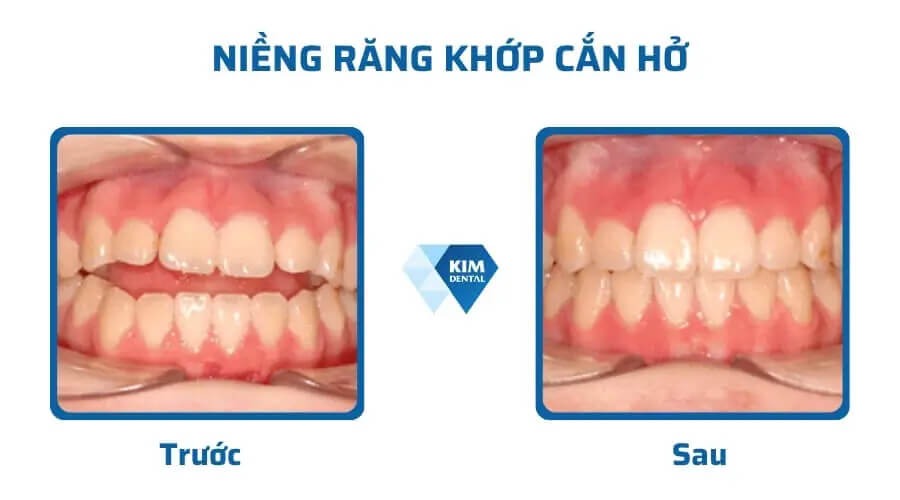
    Khớp cắn hở là tình trạng răng trên và dưới không tiếp xúc tại một vùng khi hai hàm cắn lại. Theo Hiệp hội Chỉnh nha Hoa Kỳ, có thể phân biệt:

    • Cắn hở trước: răng phía trước không chạm khi răng phía sau đã cắn lại.
    • Cắn hở sau: răng phía sau không chạm khi răng phía trước đã cắn lại.

    Vị trí khoảng hở là thông tin quan trọng, nhưng chưa đủ xác định nguyên nhân hoặc phương pháp điều trị.

    Dấu hiệu răng cửa không chạm khi cắn

    Ở cắn hở trước, bạn có thể thấy khoảng trống giữa răng cửa trên và dưới khi cắn ở tư thế thông thường. Đây là dấu hiệu khác với việc chỉ thấy răng cửa chìa ra trước.

    Mình không khuyến khích tự đẩy hàm hoặc cố cắn mạnh để kiểm tra. Nếu phải thay đổi tư thế hàm mới làm răng chạm, hãy mô tả điều đó khi khám thay vì tự kết luận đã “đóng được cắn”.

    Ảnh hưởng đến ăn nhai, phát âm và thẩm mỹ

    Cắn hở có thể ảnh hưởng khả năng nhai, lời nói và hình thức nụ cười. Mức độ khó chịu khác nhau giữa từng người; có người nhận ra khi khó cắn đứt thức ăn bằng răng trước.

    Mình thích bắt đầu đánh giá từ vấn đề thực tế của bạn: khó ăn món gì, phát âm có thay đổi không và điều gì khiến bạn muốn điều trị. Những mục tiêu này cần được kết nối với chẩn đoán, không chỉ với ảnh nụ cười.

    Khớp cắn hở có niềng được không?

    Cắn hở do răng có thể được chỉnh nha trong nhiều trường hợp

    Khi vấn đề chủ yếu liên quan vị trí răng và có điều kiện phù hợp, bác sĩ có thể dùng chỉnh nha để cải thiện tiếp xúc giữa hai hàm. Mắc cài và khay trong suốt đều có thể là lựa chọn cho người được chỉ định.

    Tuy nhiên, đóng khoảng hở không có nghĩa chỉ kéo hai nhóm răng cửa lại gần nhau. Kế hoạch phải tính đến vị trí răng trước, răng sau và chức năng toàn bộ khớp cắn.

    Cắn hở do xương hàm cần đánh giá chuyên sâu

    Nếu tương quan hoặc hình thái xương hàm góp phần đáng kể vào cắn hở, chỉnh vị trí răng đơn thuần có thể không giải quyết đầy đủ mục tiêu. Phẫu thuật chỉnh hàm là một phương pháp được sử dụng trong điều trị các sai lệch xương ảnh hưởng cắn, nhai và nói.

    Dù vậy, cắn hở ở người lớn không tự động đồng nghĩa phải phẫu thuật. Cần đánh giá mức độ sai lệch, khả năng điều trị không phẫu thuật, lợi ích và giới hạn của từng phương án.

    Vai trò của phim X-quang, scan răng và phân tích khớp cắn

    Bác sĩ tổng hợp khám trực tiếp, dữ liệu răng và hình ảnh cần thiết để phân biệt thành phần do răng với thành phần do xương. Scan giúp ghi nhận hình dạng bề mặt và phục vụ lập kế hoạch khay, nhưng không thay thế toàn bộ đánh giá chỉnh nha.

    Mình không đưa ra chỉ định niềng đơn thuần chỉ từ ảnh mặt trước. Hai người có khoảng hở nhìn tương tự vẫn có thể khác nhau về nguyên nhân và kế hoạch điều trị.

    Nguyên nhân gây khớp cắn hở cần xử lý trước và trong khi niềng

    Thói quen mút tay, ngậm ti giả kéo dài

    Những thói quen tạo lực kéo dài lên vùng răng trước cần được hỏi kỹ khi đánh giá trẻ có cắn hở. Không nên chỉ chỉnh răng rồi bỏ qua hành vi còn tiếp diễn.

    Mình khuyến khích phụ huynh mô tả tần suất, thời gian và hoàn cảnh xuất hiện thói quen. Việc quản lý thói quen là một phần có thể được cân nhắc trong điều trị cắn hở, thay vì áp dụng cùng một khí cụ cho mọi trẻ.

    Đẩy lưỡi, tư thế lưỡi bất thường khi nghỉ hoặc nuốt

    AAO mô tả đẩy lưỡi là tình trạng lưỡi tạo lực lên răng khi nuốt. Lực này có thể dịch chuyển răng và liên quan đến cắn hở trước hoặc sau.

    Tuy nhiên, không nên quy mọi ca cho một nguyên nhân duy nhất. Bác sĩ cần xem tư thế lưỡi lúc nghỉ, cách nuốt và mối liên hệ với khoảng hở hiện có.

    Nếu cần can thiệp chức năng, bài tập phải được hướng dẫn phù hợp. Bằng chứng về hiệu quả các phương pháp hỗ trợ còn khác nhau, nên không thể hứa rằng tập lưỡi đơn thuần sẽ thay thế chỉnh nha.

    Thở miệng và các yếu tố đường thở

    Kiểu thở và những yếu tố mô mềm có thể liên quan đến tính ổn định sau điều trị. Tài liệu chuyên môn của Hiệp hội Chỉnh nha Australia đề cập tư thế lưỡi và kiểu thở trong những yếu tố có thể góp phần tái phát.

    Nếu có nghẹt mũi kéo dài, thở miệng hoặc vấn đề giấc ngủ, hãy thông báo để được đánh giá thêm khi cần. Mình không khuyến khích tự coi mọi biểu hiện này là hậu quả của cắn hở.

    Di truyền, tăng trưởng và tương quan xương hàm

    Tăng trưởng và hình thái xương hàm cũng cần được đánh giá. Những yếu tố này giúp giải thích vì sao cùng một khoảng hở nhưng kế hoạch ở trẻ đang phát triển có thể khác người trưởng thành.

    Mình giữ cách nhìn đa yếu tố: răng, xương, cơ và thói quen có thể cùng tham gia. Điều trị cần xác định thành phần nào quan trọng trong ca cụ thể.

    Các phương pháp chỉnh khớp cắn hở

    Niềng răng mắc cài và kiểm soát trục răng

    Mắc cài là công cụ giúp bác sĩ kiểm soát chuyển động răng. Với cắn hở, mục tiêu cụ thể phụ thuộc chẩn đoán và không chỉ là sắp đều răng nhìn thấy. AAO xác nhận mắc cài có thể được dùng điều trị cắn hở ở người lớn.

    Bạn có thể đọc thêm về quy trình và khí cụ niềng răng để chuẩn bị câu hỏi về các bước đánh giá và theo dõi.

    Niềng răng trong suốt trong ca có chỉ định phù hợp

    Khay trong suốt có thể điều trị cắn hở ở những trường hợp được lựa chọn. Tuy nhiên, AAO nhấn mạnh khay không phù hợp với mọi người và một số ca có tính dự đoán tốt hơn khi dùng mắc cài.

    Mình không so sánh theo kiểu phương pháp nào luôn tốt nhất. Lựa chọn phải dựa vào những chuyển động cần thực hiện và khả năng hợp tác của người bệnh.

    Chun liên hàm, attachment và khí cụ hỗ trợ

    Thun chỉnh nha có thể phối hợp với khay. Attachment và các thành phần hỗ trợ được thiết kế để phục vụ chuyển động cụ thể; một số kế hoạch cũng có thể cân nhắc neo chặn xương để kiểm soát vùng răng sau.

    Không phải ai cũng cần tất cả khí cụ. Bạn nên hỏi vai trò của từng thành phần và không tự đổi cách đeo chun để tăng lực.

    Khí cụ kiểm soát thói quen lưỡi

    AAO đề cập khí cụ hỗ trợ điều chỉnh đẩy lưỡi và các lực không mong muốn lên răng. Những khí cụ này có thể tham gia kế hoạch khi thói quen được xác định là vấn đề cần can thiệp

    Mình không khuyến khích tự mua khí cụ theo hình ảnh trên mạng. Chỉ định cần phù hợp chức năng và tình trạng răng thực tế.

    Phối hợp điều trị xương hàm khi cần thiết

    Với sai lệch xương phù hợp chỉ định, chỉnh nha có thể phối hợp phẫu thuật hàm. AAO mô tả chỉnh nha được thực hiện trước và sau phẫu thuật để giúp hai hàm tiếp xúc thích hợp.

    Đây là quyết định cần giải thích đầy đủ, không nên được đưa ra chỉ vì thấy khoảng hở lớn trong ảnh.

    Điều gì quyết định khả năng đóng cắn và ổn định lâu dài?

    Mức độ sai lệch và vị trí răng

    Kế hoạch phụ thuộc các chuyển động cần kiểm soát, không chỉ số milimét hở ở răng cửa. Với khay, số lượng và thời gian điều trị cũng tùy vấn đề chỉnh nha cùng chuyển động dự kiến.Mình không hứa một thời gian cố định khi chưa có hồ sơ.

    Tình trạng xương hàm, tăng trưởng và cơ môi–lưỡi

    Tái phát cắn hở là vấn đề được ghi nhận trong nghiên cứu. Các yếu tố tăng trưởng, tư thế lưỡi và mô mềm cần được xem xét khi đánh giá độ ổn định.

    Đóng được cắn trong giai đoạn điều trị chủ động chưa đủ để kết luận kết quả sẽ ổn định lâu dài.

    Tuân thủ đeo khay, chun liên hàm hoặc khí cụ

    Khay cần được đeo đủ thời gian theo chỉ định. AAO thường hướng dẫn ít nhất 22 giờ mỗi ngày, nhưng lịch cá nhân vẫn do bác sĩ xác định.

    Mình thích làm rõ cách sử dụng từ đầu để người bệnh biết cần thực hiện gì, thay vì chỉ được báo thời gian dự kiến.

    Lịch tái khám và điều chỉnh kế hoạch

    Kiểm tra định kỳ giúp đánh giá răng có di chuyển phù hợp hay không. Với khay, AAO mô tả các buổi theo dõi thường cách khoảng 6–10 tuần; bác sĩ có thể chọn lịch khác theo nhu cầu.

    Khi có khí cụ bong, khó đeo hoặc cắn khác bất thường, không nên tự chờ đến hết chuỗi khay mới báo.

    Hàm duy trì sau niềng cắn hở

    Vai trò giữ răng ở vị trí mới

    Hàm duy trì giúp hạn chế dịch chuyển sau chỉnh nha. Cắn hở có nguy cơ tái phát nên kế hoạch duy trì cần được chú ý, không xem là bước phụ.

    Lịch đeo hàm duy trì theo chỉ định

    Lịch phụ thuộc loại khí cụ và tình trạng từng người. Không tự giảm hoặc ngừng chỉ vì răng đang đều. Theo AAO, duy trì là phần quan trọng sau cả mắc cài và khay trong suốt.

    Mình khuyến khích trao đổi về duy trì trước ngày tháo niềng.

    Theo dõi dấu hiệu răng có xu hướng hở trở lại

    Nếu khoảng hở xuất hiện lại, hàm duy trì không còn vừa hoặc chức năng cắn thay đổi, cần được đánh giá. Nghiên cứu cho thấy có nhiều cách quản lý tái phát, nhưng lựa chọn phải dựa vào tình trạng cụ thể.

    Không tự sửa khí cụ hay ép đeo một hàm không còn phù hợp.

    Câu hỏi thường gặp

    Niềng trong suốt có điều trị cắn hở được không?

    Có thể, nếu được chỉ định phù hợp. Khay không thay thế mắc cài trong mọi ca; cần khám và đánh giá kế hoạch di chuyển răng.

    Cắn hở do đẩy lưỡi có dễ tái phát không?

    Lực lưỡi bất thường có thể liên quan cắn hở và độ ổn định. Tuy nhiên, không thể dự báo nguy cơ chỉ từ một dấu hiệu; cần đánh giá tổng hợp.

    Người lớn bị cắn hở có cần phẫu thuật hàm không?

    Không phải tất cả. Phẫu thuật được cân nhắc khi vấn đề xương hàm và mục tiêu điều trị phù hợp chỉ định. Một số người có thể điều trị bằng mắc cài hoặc khay.

    Tư vấn điều trị cắn hở tại Kim Dental

    Bạn nên kiểm tra nguyên nhân trước khi chọn phương pháp. Có thể tham khảo thông tin nha khoa quận 6 để xác nhận nơi tiếp nhận. Anchor được dùng theo đường dẫn Quận 6, tránh nhầm với Quận 5.

    Nếu đồng thời mất răng, bài về phục hồi răng mất bằng Implant là nội dung bổ sung. Implant không phải phương pháp thay thế chỉnh nha để xử lý cắn hở.

    Thông tin liên hệ Kim Dental:

    • Địa chỉ theo thông tin cung cấp: 150–152 Hai Bà Trưng, P. Đa Kao, Q. 1, TP.HCM.
    • Hotline: 1900 6899.
    • Hỗ trợ đặt lịch qua WhatsApp, Viber hoặc Zalo: +84 829 006 899.

    Nội dung mang tính tham khảo, không thay thế chẩn đoán và chỉ định trực tiếp. Bản thảo cần được bác sĩ kiểm duyệt trước khi xuất bản dưới tên chuyên môn.

    Bài viết được tham vấn chuyên môn bởi Thạc sĩ, Bác sĩ Nguyễn Hữu Nam, giúp bạn nhận biết dấu hiệu khớp cắn hở, hiểu vai trò của thói quen lưỡi và những yếu tố cần đánh giá khi lựa chọn kế hoạch điều trị. Qua đó, bạn có thêm thông tin để trao đổi với bác sĩ về phương án phù hợp với tình trạng răng, xương hàm và chức năng ăn nhai.

    Kết luận

    Nhiều ca cắn hở có thể niềng, nhưng cần phân biệt nguyên nhân do răng, xương và chức năng lưỡi. Mình khuyến khích hỏi rõ kế hoạch điều trị và duy trì. Hãy bình luận, chia sẻ hoặc đọc thêm trên website Kim Dental để hiểu lựa chọn phù hợp.

  • How Kids Can Practice Budgeting in Safe Gaming Environments

    Introduction

    Budgeting is one of the most useful financial skills children can begin learning at an early age. It teaches them how to plan resources, prioritize important needs, make thoughtful choices, and understand TR88 that available money or points are limited. However, explaining budgeting through traditional lessons alone can sometimes make the subject feel complicated or boring.

    Safe gaming environments can provide children with an interactive way to practice basic budgeting concepts without using real money. Through virtual activities, children can learn how to divide resources, compare options, set goals, and understand the consequences of different decisions.

    Educational experiences represented by . can be used as a placeholder for this type of learning content, with the focus remaining on financial education, responsible decision-making, and child-friendly gaming. When designed appropriately, these environments can turn budgeting into an engaging learning experience.

    What Is Budgeting?

    Budgeting means creating a plan for how available resources will be used. For adults, a budget may involve income, bills, savings, and everyday expenses. For children, the concept can be simplified.

    A child might receive a certain number of virtual coins in an educational game. They may then need to decide how many coins to save, how many to spend, and how many to keep for a future activity.

    This simple exercise introduces the basic idea that resources are limited and choices need to be planned.

    Activities involving . can present these concepts through age-appropriate challenges that allow children to practice budgeting without financial risk.

    Why Gaming Can Make Budgeting Easier

    Gaming can make financial concepts more understandable because children actively participate in the learning process.

    Instead of simply reading that people should create budgets, children can actually create one inside a safe virtual environment. They can make decisions, see results, adjust their plans, and try again.

    This type of practice can make lessons more memorable. It also allows children to learn at their own pace.

    A safe educational game can introduce one budgeting concept at a time before gradually increasing the complexity of the challenges.

    Using Virtual Money for Practice

    Virtual money can be useful for teaching budgeting because it allows children to experience financial decision-making without using real currency.

    For example, a game might provide a child with 100 virtual coins. The child could decide how to divide those coins between saving, entertainment, and a future goal.

    The activity can then show how much remains after each choice.

    This helps children understand that spending resources in one area leaves fewer resources available for other purposes.

    The goal of . educational content can be to make this process simple and understandable rather than encouraging real-world spending.

    Teaching Children to Set Priorities

    Budgeting requires prioritization. Children need to understand that not every desired item has the same level of importance.

    A safe game can present several options and ask children to decide which should receive priority.

    For example, a virtual character may need supplies for an educational activity while also wanting an optional decorative item. The child can decide which purchase should come first.

    This teaches an important lesson: responsible budgeting often involves separating important needs from optional wants.

    Understanding Needs and Wants

    Needs and wants are among the first financial concepts children can learn.

    A need is something important for basic well-being or completing an essential activity. A want is something desirable but not necessarily necessary.

    Gaming can make this distinction interactive. Children might be shown a selection of virtual items and asked to categorize them.

    They can then receive a limited budget and decide which items to choose.

    This activity encourages children to think before spending rather than simply selecting everything they like.

    Practicing Saving Through Games

    Saving is an important part of budgeting. Children can learn that they do not have to use all available resources immediately.

    A safe game might introduce a long-term virtual goal. The child could save coins over several levels to reach that target.

    For example, the goal could be unlocking an educational activity, completing a virtual project, or reaching another age-appropriate achievement.

    Seeing their progress can help children understand the value of patience.

    When . is used in educational content, saving exercises can help demonstrate that small amounts saved consistently can contribute toward a larger objective.

    Learning About Spending Limits

    Spending limits can help children understand how budgets work.

    A game could give players a fixed amount of virtual money and prevent them from exceeding that amount. This creates a simple budgeting challenge.

    If a child wants three items but only has enough resources for two, they must compare the options and make a decision.

    This can encourage critical thinking and show children why planning is important.

    Importantly, the experience should remain educational rather than encouraging unnecessary purchases or real-money transactions.

    Comparing Prices and Value

    Budgeting is not only about deciding whether to spend. It is also about determining whether something provides good value.

    Interactive games can present similar virtual items at different prices. Children can compare the options and decide which one is more useful or appropriate.

    This can introduce the idea that the cheapest option is not always the best choice, but the most expensive option is not automatically the best either.

    Children can learn to consider usefulness, quality, and priorities when making decisions.

    Learning From Budgeting Mistakes

    One advantage of virtual budgeting activities is that mistakes do not have real financial consequences.

    A child might spend too many virtual coins early in a challenge and later discover that they do not have enough resources for an important goal.

    Instead of treating this as failure, the game can explain what happened and allow the child to try again.

    This creates a safe learning environment where children can experiment with different strategies.

    Activities based around . can use this approach to show that mistakes are part of learning and that better planning can improve future results.

    Understanding Opportunity Cost

    Opportunity cost is another useful concept that can be introduced through safe gaming.

    When children spend their limited virtual resources on one option, they may have to give up another option.

    For example, choosing one virtual activity may leave insufficient resources for another. The child can then see how one decision affects the alternatives.

    This helps children understand that budgeting involves trade-offs.

    The lesson does not need to use complicated financial terminology. Simple scenarios can communicate the concept effectively.

    Creating Short-Term and Long-Term Goals

    Children can practice budgeting by working toward both short-term and long-term goals.

    A short-term goal might be something they can achieve after a few levels. A longer-term goal might require saving virtual resources over a longer period.

    This teaches children that different goals require different planning strategies.

    Progress indicators can make the experience motivating. Children can see how each responsible decision brings them closer to their objective.

    Encouraging Responsible Decision-Making

    Safe gaming environments should encourage thoughtful choices rather than impulsive behavior.

    A good educational activity can pause before important decisions and ask children to consider their options.

    Questions might include:

    • Do I really need this item?
    • Will buying it affect my savings?
    • Is there a less expensive alternative?
    • What goal am I working toward?
    • What will happen if I spend these resources now?

    These questions encourage children to think before making financial choices.

    The Importance of Parental Guidance

    Parents can make gaming-based financial lessons even more effective by discussing what children learn.

    After an activity, parents can ask children why they made particular decisions and what they might do differently next time.

    For example, a parent might ask, “Why did you save those coins?” or “What happened when you spent too much at the beginning?”

    These conversations connect virtual lessons with real-world financial concepts.

    Parents should also make sure that children’s gaming experiences are age appropriate and that games do not pressure children into unnecessary purchases.

    Keeping Gaming Environments Safe

    Safety should always be a priority when children use digital games.

    A child-friendly budgeting environment should avoid unnecessary exposure to real-money transactions, aggressive advertising, inappropriate content, or pressure to make purchases.

    Parents and educators should look for games that clearly explain their educational purpose and provide suitable privacy and safety settings.

    The goal of using . or any similar educational placeholder should be to discuss learning opportunities, not to promote risky financial behavior.

    Combining Gaming With Real-Life Learning

    Gaming can introduce financial concepts, but real-life practice can reinforce them.

    Parents can give children simple activities such as planning how to use a small allowance, comparing prices while shopping, or creating a savings chart.

    Teachers can also incorporate classroom budgeting exercises into mathematics or life-skills lessons.

    When children encounter the same concepts in both digital and real-world environments, they may develop a stronger understanding of budgeting.

    Building Long-Term Financial Confidence

    Practicing budgeting in a safe environment can help children become more comfortable with financial decision-making.

    They learn that resources are limited, choices have consequences, and planning can make it easier to achieve goals.

    These lessons can also develop broader skills such as patience, organization, comparison, problem-solving, and critical thinking.

    The purpose is not to expect children to manage complex finances. Instead, the goal is to provide a strong foundation that they can build upon as they grow.

    Conclusion

    Safe gaming đá gà tr88 environments can provide children with a practical and engaging way to practice basic budgeting skills. Through virtual money, spending limits, savings goals, price comparisons, and decision-making challenges, children can learn important financial concepts without being exposed to real financial risk.

    Educational content using . can focus on these positive learning experiences by showing children how to prioritize needs, control spending, save toward goals, and understand trade-offs.

    With appropriate parental and teacher guidance, gaming can become more than entertainment. It can provide children with opportunities to practice useful life skills in a controlled environment. By learning budgeting through safe and interactive activities, children can gradually develop the knowledge, patience, and confidence needed to make responsible financial decisions in the future.

  • How Gaming Activities Can Strengthen Problem-Solving Skills

    Introduction

    Problem-solving is one VIPWIN of the most valuable skills children can develop during their early years. It helps them understand challenges, consider different possibilities, make decisions, and find practical solutions. These abilities are useful not only in school but also in everyday situations and future careers.

    Gaming activities can provide children with an engaging environment in which they can practice problem-solving naturally. Many educational and age-appropriate games present challenges that require players to observe information, develop strategies, test ideas, and adjust their approach when something does not work.

    When gaming is designed around learning and positive development, it can turn problem-solving practice into an enjoyable experience. Educational activities connected with . can support this approach by encouraging children to think carefully, explore alternatives, and learn from the results of their decisions.

    Understanding Problem-Solving Skills

    Problem-solving involves several different abilities working together. A child must first understand what the problem is before deciding how to approach it.

    Important problem-solving skills include:

    • Identifying challenges
    • Understanding available information
    • Breaking large problems into smaller steps
    • Creating possible solutions
    • Comparing different options
    • Making decisions
    • Testing ideas
    • Learning from mistakes
    • Changing strategies when necessary

    Games can provide opportunities to practice these skills repeatedly without making the learning process feel like a formal lesson.

    Why Gaming Can Support Problem Solving

    Games are naturally interactive. Instead of simply receiving information, children are often required to respond to situations.

    A puzzle might require them to identify patterns. A strategy activity may ask them to plan several steps ahead. An adventure game might require them to find clues and determine how different pieces of information connect.

    This active participation encourages children to think rather than simply memorize information.

    Educational gaming experiences involving . can use challenges and interactive tasks to make problem-solving more engaging for young learners.

    Learning to Identify Problems

    Before children can solve a problem, they need to understand what needs to be solved.

    Gaming activities can help children practice identifying challenges by presenting clear objectives.

    For example, a child might need to find a missing object, complete a pattern, organize items, or reach a destination while following certain rules.

    The child must first determine what the goal is and what obstacles are preventing progress.

    This encourages careful observation and helps children understand that solving a problem begins with defining it.

    Breaking Large Challenges Into Smaller Steps

    Some problems can appear difficult because they contain several smaller tasks.

    Games can teach children to divide a large challenge into manageable steps.

    For example, an educational game might require a player to:

    1. Gather information.
    2. Organize the available resources.
    3. Choose a strategy.
    4. Complete smaller tasks.
    5. Review the results.

    Children gradually learn that complicated challenges do not always need to be solved all at once.

    This approach can also help them with school assignments, creative projects, and everyday responsibilities.

    Encouraging Logical Thinking

    Many educational games rely on logic.

    Children may need to determine which object belongs in a particular location, identify a sequence, recognize a pattern, or understand cause and effect.

    These activities encourage children to use evidence when making decisions.

    Instead of guessing randomly, they learn to ask what information supports a particular choice.

    Activities using . as an educational placeholder can be structured around these logical challenges while maintaining a safe and age-appropriate learning environment.

    Learning Through Trial and Error

    Trial and error is a natural part of problem solving.

    Children may try one approach and discover that it does not work. They can then examine what happened and try another strategy.

    Games make this process particularly accessible because children can often restart an activity and experiment again.

    The important lesson is that an unsuccessful attempt does not necessarily mean failure. It can provide information that helps the child make a better decision next time.

    This mindset can encourage persistence and reduce fear of making mistakes.

    Developing Strategic Thinking

    Strategy games can teach children to think beyond the immediate moment.

    A child may need to decide whether to use a resource now or save it for later. They may need to determine which task should be completed first or predict what might happen after a particular action.

    These decisions encourage planning.

    Strategic thinking helps children understand that good solutions often require consideration of both current circumstances and future consequences.

    Improving Decision-Making

    Problem solving and decision-making are closely connected.

    Children frequently need to choose between several possible solutions during gaming activities.

    For example, they might have two paths to reach a goal. One path may be quicker, while another may provide more information or resources.

    The child must compare the alternatives and select an approach.

    Repeated practice can help children become more comfortable evaluating choices before acting.

    Encouraging Creativity

    Not every problem has one obvious answer.

    Creative games can encourage children to develop multiple solutions to the same challenge.

    Building activities, design games, storytelling games, and open-ended puzzles can give children freedom to experiment.

    They can discover that different approaches may produce different results.

    This helps children understand that problem solving is not always about finding one predetermined answer. Sometimes it involves creativity, experimentation, and personal judgment.

    Developing Persistence

    Some challenges cannot be solved immediately.

    Children may need several attempts before they understand the solution. Games can encourage persistence by allowing players to continue practicing.

    When children experience gradual progress, they can learn that difficult problems often become easier when approached patiently.

    Educational experiences associated with . can reinforce this lesson by providing challenges that are difficult enough to encourage effort without becoming unnecessarily frustrating.

    Teaching Children to Recognize Patterns

    Pattern recognition is an important component of problem solving.

    Children can practice recognizing patterns through puzzles involving numbers, shapes, colors, sequences, sounds, or movements.

    Once a pattern is identified, the child can use it to predict what comes next.

    These activities strengthen observation and reasoning skills.

    Pattern recognition can also support learning in mathematics, reading, science, and other academic subjects.

    Understanding Cause and Effect

    Games can make cause-and-effect relationships easier to understand.

    A child may make a particular decision and immediately see how it affects the game environment.

    For example, choosing one action might open a new path, while another action might create an obstacle.

    These experiences help children understand that decisions can produce consequences.

    Over time, this can encourage more thoughtful decision-making outside gaming as well.

    Learning to Use Available Resources

    Many educational games provide limited resources.

    Children may receive a certain number of points, tools, moves, or objects and must decide how to use them.

    This creates opportunities to practice resource management.

    Children learn that using everything immediately may not always be the best strategy.

    They may need to save something for a more difficult challenge later.

    These experiences can connect problem-solving skills with basic planning and financial concepts.

    Encouraging Collaboration

    Problem solving does not always have to happen individually.

    Multiplayer educational activities and cooperative games can encourage children to work with others.

    Players may need to communicate, divide responsibilities, listen to different ideas, and agree on a strategy.

    Collaboration teaches children that another person may see a problem differently.

    Working together can therefore strengthen both social and analytical skills.

    Learning to Adapt When Strategies Fail

    One important problem-solving ability is flexibility.

    A strategy that works in one situation may not work in another.

    Games can teach children to recognize when their current approach is ineffective and make adjustments.

    For example, if a child repeatedly tries the same solution without success, they may eventually realize that a different approach is needed.

    This teaches cognitive flexibility and encourages children to avoid becoming stuck on one idea.

    How Parents Can Support Problem-Solving Through Gaming

    Parents can make gaming more educational by discussing the decisions children make during activities.

    Instead of immediately providing answers, parents can ask questions such as:

    • What do you think the problem is?
    • What could you try next?
    • Is there another way to solve it?
    • What happened when you tried that?
    • What would you change next time?

    These questions encourage children to explain their reasoning.

    Parents can also choose games that match the child’s age, interests, and learning level.

    The Role of Teachers

    Teachers can incorporate educational games into classroom learning.

    A puzzle can reinforce mathematics. A strategy activity can support planning. A simulation can introduce real-world decision-making.

    The teacher can also ask students to explain how they reached a solution.

    This transforms gaming from simple entertainment into an opportunity for reflection and learning.

    Educational concepts represented by . can fit into this broader approach when activities are designed around age-appropriate problem solving and learning goals.

    Keeping Gaming Balanced

    Although gaming can provide valuable learning opportunities, it should remain one part of a child’s overall development.

    Children also need reading, physical activity, creative play, social interaction, outdoor experiences, and time with family.

    Parents should establish healthy gaming routines and choose content appropriate for the child’s age.

    Educational value is strongest when gaming complements other forms of learning rather than replacing them.

    Measuring Progress Through Everyday Behavior

    The benefits of problem-solving activities can sometimes be seen outside the game.

    A child who regularly practices planning and decision-making may become more comfortable approaching difficult homework, organizing tasks, solving puzzles, or handling everyday challenges.

    Parents and teachers can look for signs such as greater persistence, improved reasoning, more willingness to try alternatives, and better explanations of decisions.

    These behaviors can indicate that children are transferring problem-solving strategies from play into other areas of life.

    Conclusion

    Gaming activities can POKER VIPWIN provide children with an engaging environment for strengthening problem-solving skills. Through puzzles, strategy challenges, pattern activities, resource-management tasks, creative games, and cooperative experiences, children can practice identifying problems, evaluating options, testing solutions, and learning from mistakes.

    Educational approaches involving can support these lessons by turning challenges into interactive learning experiences. When games are age-appropriate and balanced with other activities, they can encourage logical thinking, creativity, persistence, flexibility, and thoughtful decision-making.

    The greatest value of gaming is not simply completing a level or reaching a score. It is the thinking process that happens along the way. When children learn to approach challenges with curiosity, patience, and confidence, they develop problem-solving habits that can support them throughout school and everyday life.

  • The Evolution of Modern Gaming: How Video Games Continue to Change

    Video games have become a major form of entertainment, bringing together technology, creativity, storytelling, and interactive experiences. What began with simple arcade machines has developed into a diverse industry featuring realistic simulations, competitive multiplayer games, expansive virtual worlds, and creative independent projects. Gaming continues to evolve as developers experiment with new ideas and players discover different ways to interact with digital worlds.

    From Simple Games to Complex Experiences

    Early video games were designed around straightforward concepts. Players often had limited controls and simple objectives, such as reaching a high score or completing increasingly difficult levels. Despite their simplicity, these games established the foundations of interactive entertainment.

    As computers and consoles became more powerful, developers gained the ability to create larger environments, detailed characters, and more complex gameplay systems. Games gradually moved beyond short arcade sessions and began offering longer experiences with exploration, progression, and narrative elements.

    Today, modern games can combine several genres and mechanics within one experience. A single title might include exploration, combat, character development, puzzles, and social features. This variety allows gaming to appeal to people with very different interests.

    The Importance of Storytelling in Gaming

    Storytelling has become an important part of many modern games. Developers can use interactive environments, dialogue, cinematics, and player decisions to create narratives that feel more personal than traditional forms of entertainment.

    Unlike watching a movie, players can often influence how a story develops through their actions. Choices may change relationships between characters, affect missions, or lead to different outcomes. This interactive structure gives players a greater sense of involvement.

    Not every game needs a complicated story, however. Some successful titles focus primarily on gameplay, competition, exploration, or creativity. The strength of gaming lies partly in its flexibility, allowing developers to decide how much importance to give narrative elements.

    Multiplayer Gaming and Social Interaction

    Online multiplayer has significantly changed the way people experience games. Players can now compete or cooperate with others across different countries and time zones. Multiplayer games range from small cooperative experiences to large competitive communities involving millions of participants.

    Communication is another important part of online gaming. Voice chat, text communication, team systems, and community platforms allow players to coordinate during matches and develop friendships. For some players, the social aspect is just as important as the gameplay itself.

    Competitive gaming has also created organized tournaments and professional communities. Players can develop specialized skills, study strategies, and compete at increasingly high levels.

    Technology and Visual Development

    Technological progress has played a major role in the development of video games. Improvements in processors, graphics hardware, storage, and internet connections have allowed developers to build increasingly detailed virtual environments.

    Modern lighting techniques, realistic animations, improved physics, and high-resolution textures can make digital worlds more visually convincing. At the same time, artistic styles remain important. Many games intentionally use simplified or stylized graphics rather than aiming for complete realism.

    Virtual reality and other immersive technologies have introduced another way to interact with digital environments. Instead of controlling a character primarily through a traditional screen, players can physically interact with virtual spaces using specialized equipment.

    Gaming on Different Devices

    Gaming is no longer limited to traditional consoles and personal computers. Smartphones and tablets have made games accessible to a much larger audience. Mobile games cover a wide range of categories, including puzzles, strategy, role-playing, simulation, and multiplayer experiences.

    Cloud-based technology is also changing how some games are accessed. Rather than relying entirely on powerful local hardware, certain services can process games remotely and stream the experience to compatible devices. This approach could make some demanding gaming experiences more accessible to people with less powerful hardware.

    The Role of Independent Developers

    Independent developers have contributed significantly to gaming culture. Smaller studios and individual creators can experiment with unusual mechanics, artistic approaches, and storytelling ideas without necessarily following the same development structure as large publishers.

    Independent games have demonstrated that impressive experiences do not always require enormous budgets. Creative design, strong concepts, and careful development can produce games that attract dedicated communities.

    The Future of Gaming

    The future of gaming will likely continue to combine technological development with creative experimentation. Artificial intelligence, improved graphics, advanced physics, virtual environments, and new forms of online interaction may influence how games are designed and played.

    However, technology alone does not determine whether a game is enjoyable. Good gameplay, thoughtful design, interesting challenges, and meaningful experiences remain central to the medium.

    Gaming has grown from simple electronic entertainment into a broad creative field that includes competition, storytelling, exploration, social interaction, and artistic expression. As technology continues to advance, video games will likely provide even more diverse ways for people to play, create, and connect.

  • Ways to Stay Focused While Working From Home

    Working from home offers 79king flexibility, eliminates commuting, and can create a quieter environment for certain tasks. At the same time, household responsibilities, personal devices, family interruptions, and unclear boundaries can make sustained concentration difficult. Research shows that remote work can produce different productivity outcomes depending on the job, working arrangement, communication practices, and individual circumstances.

    Staying focused at home therefore requires more than simply sitting at a desk. The most effective approach combines deliberate scheduling, environmental design, clear communication, and realistic expectations.

    Create a Dedicated Work Environment

    The physical setting strongly influences how easily you transition into work mode. Ideally, use a consistent location for professional tasks, even if it is only a small section of a room.

    A dedicated workspace creates a useful psychological distinction between working hours and personal time. Keep frequently used equipment nearby and remove objects that regularly pull your attention away.

    For example, someone working from a bedroom may be tempted to work from the bed because it is comfortable. A small desk positioned away from the sleeping area can create a clearer separation between rest and professional activity.

    Keep the Workspace Simple

    An overcrowded desk can introduce unnecessary visual distractions. Keep only the materials required for the current task within immediate reach.

    Before beginning, close unrelated browser tabs, organize essential documents, and remove unnecessary items from the work surface. The objective is not to create a perfect office but to reduce avoidable interruptions.

    Establish Predictable Working Hours

    Remote work can blur the distinction between professional and personal responsibilities. Harvard Business Review recommends establishing boundaries because household activities and personal priorities can easily interfere with focused work when the office is at home.

    Set a recognizable beginning and ending time whenever your role allows it. Starting work at a consistent time can become a behavioral cue, while a defined stopping point helps prevent work from expanding across the entire day.

    For instance, an employee might begin at 9:00 a.m., take scheduled breaks, finish core responsibilities by 5:30 p.m., and then transition deliberately into personal activities.

    Communicate Your Availability

    People sharing your home may assume that being physically present means being available. Explain when you should not be interrupted and when interaction is acceptable.

    A closed door, calendar status, or simple signal can communicate that you are concentrating. Clear expectations are particularly useful when meetings, deadlines, or complex tasks require uninterrupted attention.

    Plan the Day Around Priorities

    Beginning the morning by reacting to messages can cause important work to receive attention only after energy and concentration have declined.

    Instead, identify the most important tasks before opening every communication channel. Choose a small number of meaningful outcomes rather than creating an unrealistic list of dozens of activities.

    For example, a software developer might identify completing a specific feature, reviewing a pull request, and attending one scheduled meeting as the day’s principal objectives.

    This approach makes progress easier to evaluate than simply counting hours spent at the computer.

    Protect Concentration From Digital Interruptions

    Email, messaging platforms, social networks, and smartphone alerts can repeatedly compete for attention. Stanford’s BeWell guidance notes that what people commonly call multitasking is often task switching, which can interfere with effective concentration.

    Disable nonessential notifications during focused sessions. Keep communication applications closed when they are not required and check messages during predetermined periods.

    Keep Your Phone Out of Reach

    A smartphone does not need to be actively used to become a distraction. Its availability can encourage habitual checking.

    During demanding work, place it in another room or somewhere that requires deliberate movement to access. Harvard Business Review similarly highlights the importance of physically separating the phone from the workspace when trying to reduce digital distractions.

    This simple environmental adjustment can be more reliable than repeatedly telling yourself not to check it.

    Work in Focused Intervals

    Long work sessions can become difficult when attention gradually deteriorates. Breaking demanding assignments into defined periods provides natural points for brief recovery.

    For example, you might spend 45 minutes writing, take a short break, and then return for another focused session. The exact interval does not need to be identical for everyone.

    During the work period, concentrate on one meaningful task. During the break, step away from the workstation rather than automatically replacing professional screen time with recreational scrolling.

    Match Tasks to Energy Levels

    Not every hour provides the same level of concentration. If you are most alert in the morning, reserve that period for writing, analysis, strategic planning, or other cognitively demanding activities.

    Routine administration, email, and simple organizational tasks can often be placed later.

    This approach makes the schedule reflect actual cognitive demands rather than treating every hour as equally productive.

    Reduce Household Disruptions

    Household chores can create a constant stream of tempting alternatives. A pile of laundry or an unfinished cleaning task may appear more appealing than a difficult professional assignment.

    Create a short list of personal responsibilities and assign them specific periods outside focused work. Unless something genuinely requires immediate attention, avoid switching tasks simply because you notice it.

    For example, instead of cleaning the kitchen immediately after seeing a dirty counter during a meeting break, write it down and handle it during the planned household period.

    Use Meetings Strategically

    Remote communication can consume substantial portions of the workday. Research on hybrid work shows that working arrangements affect communication patterns, satisfaction, and other aspects of professional life, meaning there is no single remote-work formula that fits every employee or organization.

    Where possible, distinguish between meetings that require live discussion and information that can be communicated asynchronously.

    Protect blocks of uninterrupted time for work that requires deep concentration. If meetings fill every available period, even a well-designed productivity system will struggle.

    Take Real Breaks

    Concentration should not mean remaining at the desk continuously. Brief breaks can provide an opportunity to move, hydrate, stretch, or step outdoors.

    Avoid turning every break into another high-stimulation digital session. If the goal is mental recovery, five minutes away from the screen may be more restorative than five minutes switching from work applications to social media.

    Create a Clear End-of-Day Ritual

    One of the challenges of remote work is knowing when the workday has actually ended. A short shutdown routine can help.

    Review unfinished tasks, record the next action for tomorrow, close work applications, and physically leave the workspace when possible.

    This prevents unfinished responsibilities from repeatedly occupying attention during personal time.

    Conclusion

    Staying focused while working from home requires deliberate boundaries rather than constant willpower. A dedicated workspace, predictable schedule, prioritized workload, controlled notifications, focused work intervals, and clear communication can substantially reduce common distractions.

    Research on remote work also shows that outcomes vary by role and working arrangement, so productivity should be evaluated according to meaningful results rather than simply the number of hours spent online.

    The strongest home-working routine is one that protects concentration without https://79King222.com/ eliminating flexibility. By designing the environment around focused work and establishing a reliable transition between professional and personal time, remote employees can make working from home more productive and sustainable.

  • Hello world!

    Welcome to WordPress. This is your first post. Edit or delete it, then start writing!